Theater 1
Now PlayingThe Flagship
TimeSink's primary room for featured programming and essential screenings.
Ends in
--:--
Bobby Mortal
Dir. Rodney Ferrer 2022 ·70 min
Once you enter, you'll be synced with everyone in the room.
Selected films, playing at real showtimes, with the filmmakers, guests, and audience in the room. Cinema worth showing up for.
TimeSink Presents · VOL 1: LOOK UP
Continuous screenings · doors always open
Dir. Rodney Ferrer · 2022 · 70 min
Once you enter, you'll be synced with everyone in the room.
Dir. Rodney Ferrer
Cast: Colby Cyrus, Bruce Hermann, Yelena Ferrer, Tish Brandt, John Zion
Dir. Alex Piperno
Dir. Zev Aaron
Cast: Aiden Farrell
Dir. Maya Deren
Cast: Alexander Hammid, Maya Deren
TimeSink Presents
Theater 1
Now PlayingThe Flagship
TimeSink's primary room for featured programming and essential screenings.
Ends in
--:--
Dir. Rodney Ferrer 2022 ·70 min
Once you enter, you'll be synced with everyone in the room.
Theater 2
IntermissionGuest Curated
Invited curators bringing new perspective, context, and taste into the room.
Next in
--:--
Dir. Alex Piperno 2011 ·7 min
Once you enter, you'll be synced with everyone in the room.
Theater 3
IntermissionMidnight Cinema
For films, moods, and impulses that arrive later at night.
Next in
--:--
Dir. Zev Aaron 2020 ·6 min
Once you enter, you'll be synced with everyone in the room.
Theater 4
Now PlayingThe Retro
Foundational cinema, repertory screenings, and public domain revivals.
Ends in
--:--
Dir. Maya Deren 1943 ·14 min
Once you enter, you'll be synced with everyone in the room.
TimeSink Presents
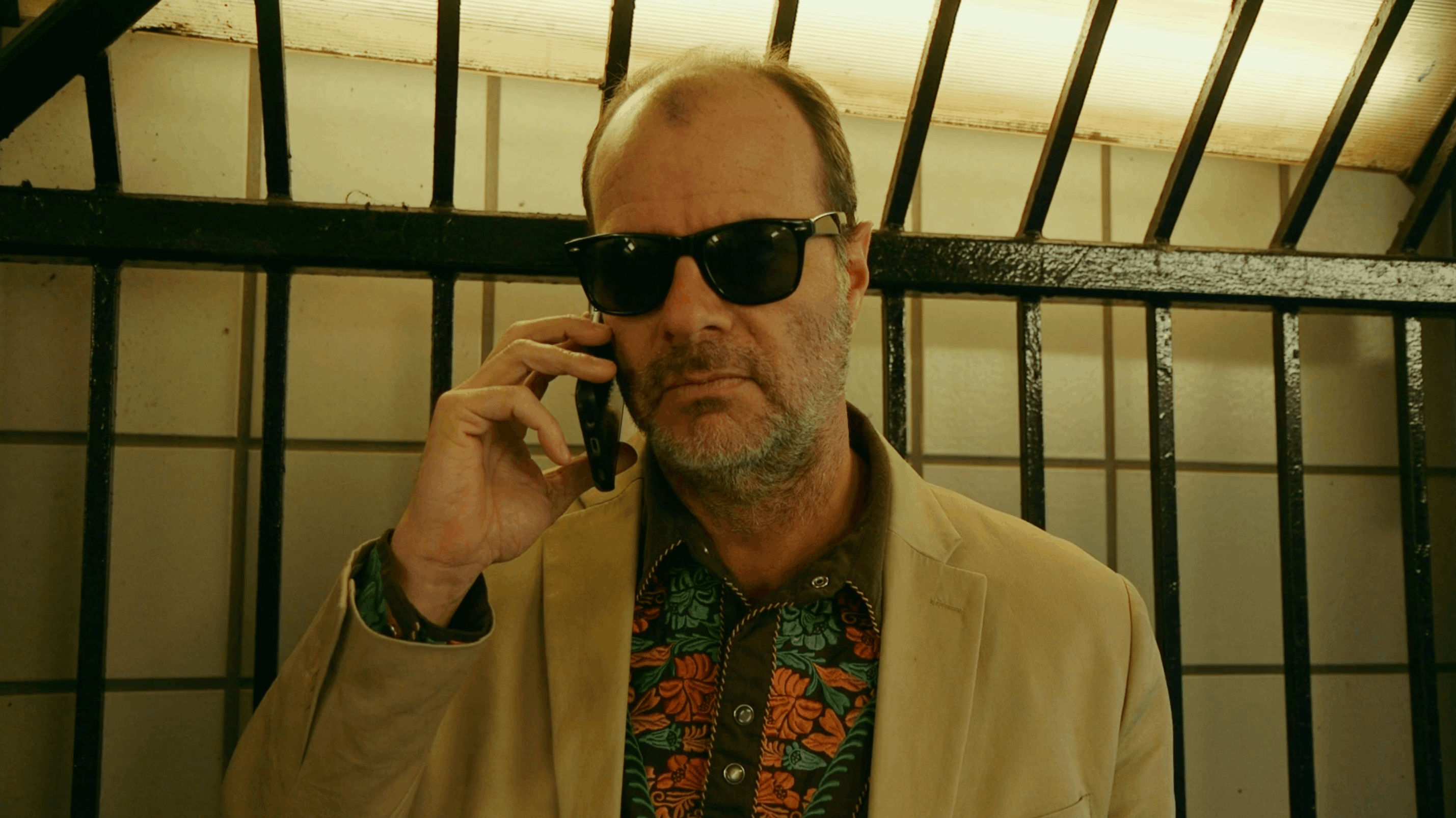
Bobby Mortal was a flash in the pan, funny man. From Dangerfield's to The Laugh Factory, he's done them all. Now a burnt out comedian, Bobby Mortal fights tooth and nail for every laugh. Watch his final act.
Dir. Rodney Ferrer
Cast: Colby Cyrus, Bruce Hermann, Yelena Ferrer, Tish Brandt, John Zion
TimeSink Presents
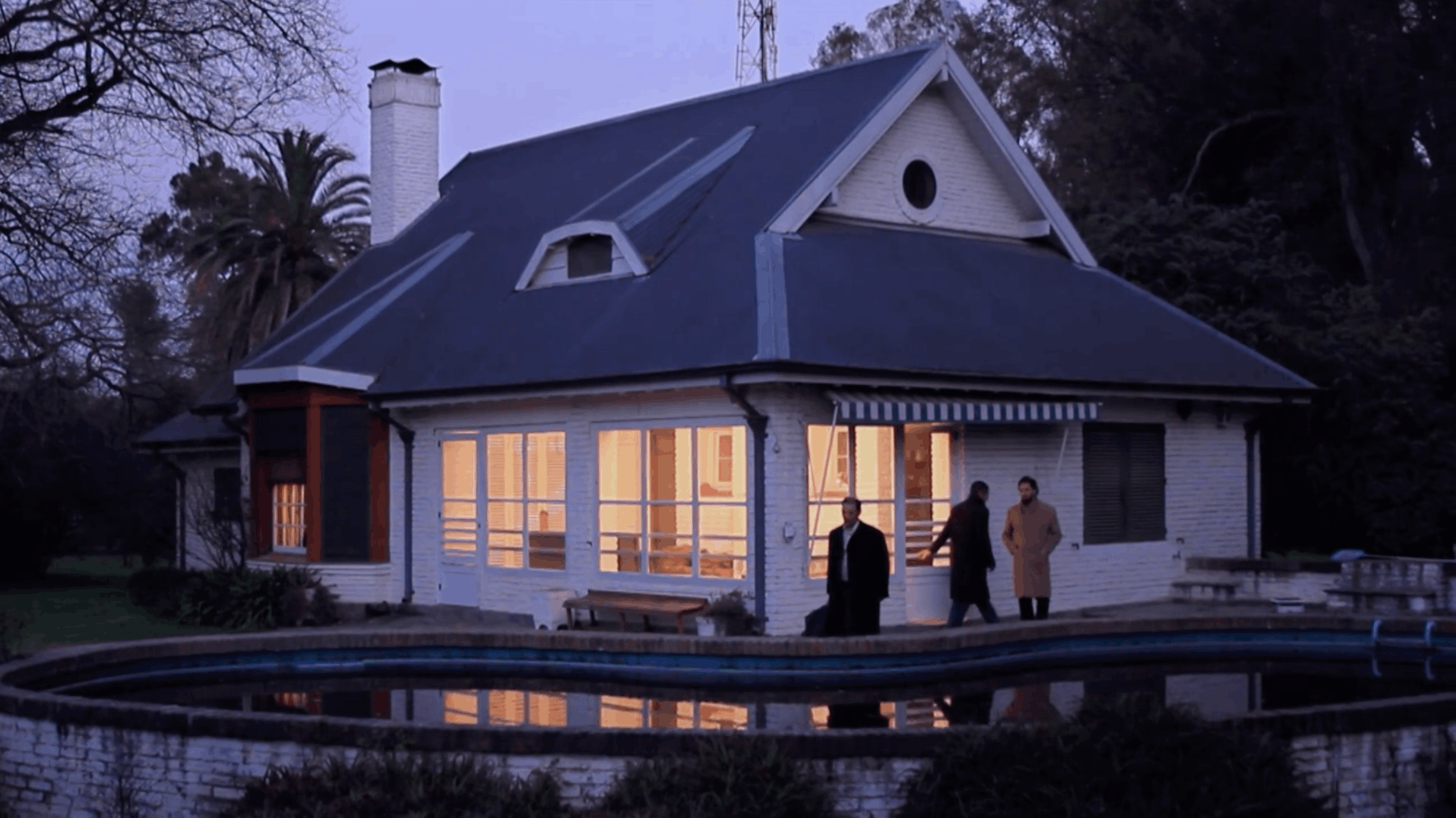
At the garden of a provincial summer house, a series of operations is carried out, involving a man, a woman and a group of individuals with certain convictions. At the garden of a provincial summer house, a series of operations is carried out, involving a man, a woman and a group of individuals with certain convictions.
Dir. Alex Piperno
TimeSink Presents
Man goes shopping: a messianic reckoning. A one-person narrative shot on 16mm exploits religious themes to raise a question concerning modern technology.
Dir. Zev Aaron
Cast: Aiden Farrell
TimeSink Presents
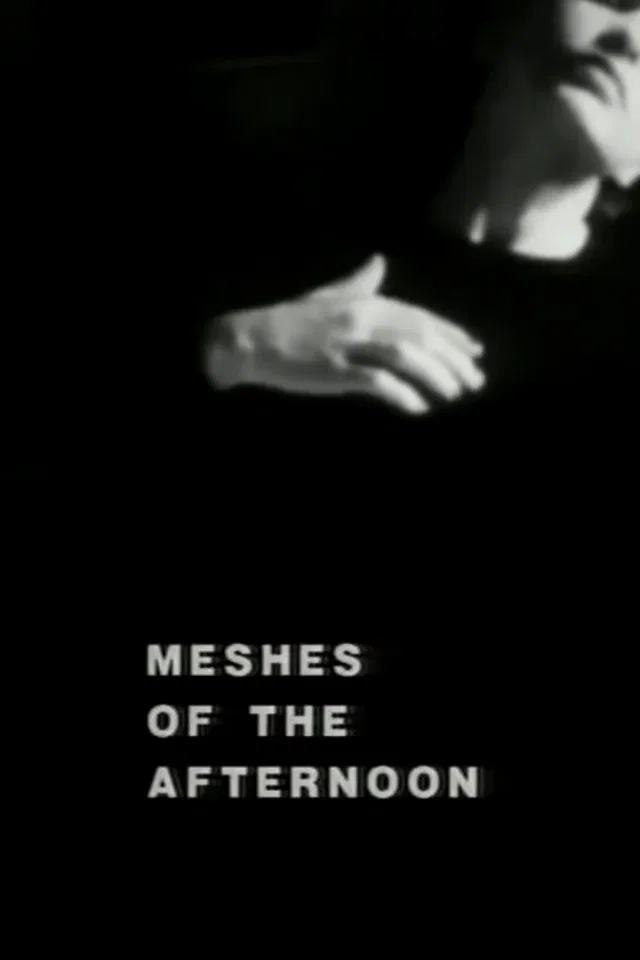
Time fractures, repeats, and slips out of order in this hypnotic short, where a woman moves through the same moments again and again, each time slightly altered. Long before filmmakers like David Lynch, this film understood how memory, identity, and reality can blur into something dreamlike and unsettling. Often cited as a turning point, Meshes of the Afternoon marks cinema’s shift away from linear storytelling toward a more modern language, one that filmmakers are still exploring today.
Dir. Maya Deren
Cast: Alexander Hammid, Maya Deren
The conversation continues
The after-hours room. Nobody's off topic.
Saw Apashe Philharmonic in Orange and can't stop thinking about the visuals
Going in, I knew nothing about Apashe or his music, and only had a passing familiarity with electro and trap outside of the 1x per year Positiv Festival at the 2,000-year-old Roman amphitheater in Orange. What immediately impressed me was the audacity of the composition itself: electronic music and enormous bass arranged for a full philharmonic orchestra. I admittedly had to look up beforehand what "philharmonic" actually means. As it turns out, there is essentially no structural difference between a philharmonic and a symphony orchestra. Both generally use the same families of instruments and can involve somewhere around 80 to 100 musicians. There seemed to be about that many on stage, dressed in black robes with their hoods up, surrounded by strings, brass, woodwinds and percussion. The whole thing already had the feeling of some strange ceremony. But as impressive as the sound was, what really stayed with me were the images and motion graphics projected and mapped onto the ancient Roman wall behind the stage. I'd never seen these techniques used quite this way. The imagery seemed to draw from antiquity, Gothic art, religious iconography, empire, exploration and historical catastrophe, but filtered through something much darker. Set against the bass and orchestra, it felt like we were being dragged through the darker recesses of human psychology, the same inscrutable energies that drove people to cross oceans, conquer new lands, slaughter one another for resources, build empires and burn them down again. And the imagery itself was constantly mutating. Statues and artifacts appeared to have been captured in 3D through scans or photogrammetry, then fractured, split apart and reassembled. Blood gushed through monumental forms. Fierce old paintings suddenly filled the entire Roman wall. Ships pushed violently through black seas. At one point a vessel bearing a Dutch flag seemed to charge endlessly forward. It was cinematic, but not exactly cinema. Watching it, I had the strange feeling that I was encountering some new form of cinema, one in which architecture, music, historical imagery and motion graphics had replaced the screen and narrative. So I wasn't particularly surprised when I later came across Apashe saying: > "I'm drawn to composing things that sound like the theme song for the bad guy in a movie." For 90 minutes, that is almost exactly what it felt like. Except the "bad guy" wasn't really a character. It felt as though we were following, scene by scene, something much older and harder to name: the violent, creative, insatiable energy that has carried humanity through millennia. The same energy that appears again and again in mythology and the Bible, in stories of kings, conquest, exile, apocalypse and rebirth. The same thing Melville finds in Captain Ahab, where an almost superhuman will to push forward, discover, possess and overcome finally becomes indistinguishable from self-destruction. Maybe that's what I found so compelling about the performance. It wasn't simply that the visuals illustrated the music. For a little while, the music, images, architecture and history seemed to become one thing. And projecting all of this onto a Roman theater that has itself survived two thousand years of human ambition, violence, religion, empire and collapse made the whole thing feel strangely complete. https://youtube.com/shorts/g28FKgPH_zU?si=0xj_YEcPpVl23Poa
@aaronzomback · 16h ago
No replies yet
The Odyssey
BEFORE Very excited for There Will be Blood (35mm) and The Odyssey (70mm). Christopher Nolan is much better than Paul Thomas Anderson — excluding TWBB and The Master — even with cheesy dialogue and music. PTA’s two epics are better, but he’s very inconsistent. I will be curious to see if I prefer 35mm or 70mm. The cinematography in TWBB and TM are spectacular. Blessed with unlimited money, both directors too often and robustly cast ensembles Nolan likes making movies about white men going home to restore the nuclear family. PTA not so much. Different childhoods? Nolan is maybe more of a rule-follower. But then I think about his early movies. He’s both more creative and rule-following than PTA perhaps. PTA goes off the rails. Magnolia was cool. Right now, I can’t wait for the Hollywood screening of The Odyssey, based on my love of Inception minus Joseph Gordon Levitt. Odysseus speaks English, right? AFTER Christopher Nolan and Paul Thomas Anderson, PART II They were born one month apart. Like the empty protagonist, Christopher Nolan has lost his way. Can’t even make Imax to 70mm look phenomenal. It’s an AI film, like one battle after another, even if they didn’t use AI, but did they? If one hasn’t seen the odyssey, one probably shouldn’t waste more money. They already wasted $400 million, though, economically, of course, it’s not waste One would be better served to read the original (in English, not a super recent version) and watch Lord of the Rings or Elysium. Telemachus will be king, civilization will heal, and dawn will break. The law of Zeus 🫡 Must be careful with adaptations and sever one’s love of the source material. PTA did this with There Will Be Blood, but not with the Pynchon movies. Glad I went and it didn’t drag at all in three hours, which is cool, and there were a few cool visuals that didn’t last so long, though I did leave for 15 minutes. Reminded me of the third Batman. If someone gave me $25(0) million, I would make a good movie. But I’m over white dudes with too much money. Terrible performances, casting, script top to bottom. Grossed $700 million and counting. Reminds me of One Battle After Another, a phrase that well summarizes Nolan’s flick
2 replies
TimeSink is a cinema built on a simple belief: the greatest films are the ones you can’t stop talking about. Each showcase, we select a limited slate of films and put them on at real showtimes, with an audience gathered around every screening. Beyond the showcase, special events and series bring premieres, live programs, and nights with filmmakers. Because cinema doesn’t end with the film, it lives on through its audience.
Each showcase brings together a tight selection of films, running continuously across their own theater rooms. Drop in when the lights are down, catch the next showing during intermission, and stay for the conversation around each film.
Every screening has its own theater room: a shared space with live chat, a visible audience, and reactions landing on the same frame you're watching.
Some nights end with a filmmaker. Others become conversations. Some turn into workshops. No two events are the same.
Every memorable screening begins with someone who wants to share a film they believe in. Sometimes that's the filmmaker. Sometimes it's a guest curator. Sometimes it's a festival. Next time, it could be your night, with TimeSink as your stage.
The Showcase screens all day, every day. Hosted nights are added week to week; most happen once, so if one catches your eye, plan around it.